Sunday, October 14, 2007

Symbolic Toolkit Matlab 2007b

COMMUNICATION IN THE PAPER

by: Just Ariel Beramendi


reflection of the Catholic Church is maturing and evolved in tandem with the historical, cultural and technological instruments of social communication, without forgetting at any moment that these media continue developing and increasingly affecting society. Before the V Latin American Episcopal Conference and the Caribbean, with hindsight this is the reflection on the communication in the Church in Latin America and Caribbean.


COMMUNICATION IN PUEBLA (1979)

In the Assembly of the Bishops of Latin America and the Caribbean, held in Puebla at the end of 1979, the common thread of thought of the Catholic Church in Latin America and the Caribbean has been stressed that evangelization, proclaiming the Kingdom, is communication and therefore the media should be taken into account in all aspects of transmission of the Good News. (DP1063)

A constant concepts such reflection is the idea that the essential mission of the Church is evangelization, and which could not dispense with the media to proclaim the Christian message effectively.

"The Church would feel guilty before God if they did not utilize these powerful means that human intelligence ever more perfect" (Evangelii nuntiandi, 45)

So the thinking and attitude of the Church to these instruments is changing the extent that they affect more and more in society and therefore in the life of the Church.

In Puebla it is recognized that the pastoral are not trained in this area (DP1077) and that would do well to find space for training in the area of \u200b\u200bsocial communication, even frowned upon investment in this area by superiors.

Puebla If the communication refers to "massive" in Aparecida and can not stop talking about an ecosystem of communication as a product of globalization.

face of poverty, marginalization and injustice Puebla document, in the field of communications, claims that the Church should give more voice to the dispossessed (DP1094), today are the same media that offer the possibility - the previously ignored - of not simply passive recipients but active emitters interacting with reality and somehow found space to amplify the "voice" that have always had and that society does not listen. The role of the Church in this context is that of the integral human development, ie not just a material handouts, but accompanied by adequate information and training so that people can jump the digital divide and leave the exclusion found in the lack of access to the new "citizenship cards" that offer social media.

While in the early '80s in Puebla states the right to information (DP1095). The Aparecida document assumes new forms of exclusion and speaks of illiteracy in the use of new media and shows great concern over new forms of marginalization caused by those with access to information and communication technologies (info- poor DA 490) and those able to access and use these communication tools. (Info-rich)

COMMUNICATION IN SANTO DOMINGO (1992)
Santo Domingo in the reflection on the communication takes another step of maturity to understand the communication - Evangelism, Proclamation of the Kingdom - as communion (DSD 279) "What we have seen and heard we proclaim, that you also may have fellowship with us. And we are in communion with the Father and His Son Jesus Christ "(1 Jn 1.3).

The "leap" Santo Domingo document done in thinking about communication is considerable, it conceives of itself as evangelization communication to communion. In fact, the reflection proposed by the bishops in this document is the result of a reflection of theology articulated in terms of communication (the mystery of the Trinity and the incarnation of the Son of God, seen in terms of divine communication and communication of the divine and human) .

After this theological reflection, Santo Domingo becomes the pastoral dimension practice under the premise of "Strengthen the Church's presence in the world of communication" as a priority for those responsible for the people of God (cf. John Paul II, Inaugural address, 23)

But the bishops in Santo Domingo warn that mass media are the risk of manipulating and imposing views of the world, especially since the ownership of media companies is in the hands of a few. Thus, there is a call to pastoral workers to be vigilant and critical time to consume media products. In response

pastoral in this context arises from the Santo Domingo document, use the media as instruments for culture and communion within the Church and as a space for dialogue Church World.

Like Puebla, in Santo Domingo reiterated that criticism and professional training in the use of social media is the pastoral response in the area social communication in this sense both papers again appeal to the bodies and public associations Catholic communicators to find in them a space for mutual support and training in this field.

In 1992, when publishing this document, there is still the phenomenon of media convergence in the digital format, and the Internet had not broken into the society of telematics and informatics were designed only as "new challenges for integration of the Church in this world "(DP280) and thus if it comes to Santo Domingo Cultural Image in Aparecida talking about the information society

LA APARECIDA COMMUNICATION (2007)

"Disciples and missionaries of Jesus Christ so that our peoples may have life in Him." Under this slogan the Catholic Church in Latin America and the Caribbean have seen the reality and from the eyes of faith has been evaluated and given a critical view on the life of the Church in the present context, inviting-finally - to become aware of our identity disciples and missionaries of Christ. ("See, judge and act," DA19)

While the document in preparation for the V Conference was not much space to the reality of communication within the Church [1]; pleasant surprise was the to learn that the reflection of the bishops of the Continent of Hope gave the Church a document that invites all of it readable coded communication. Where

see the word mission, fellowship, evangelism, discipleship, witness or understand it as the act of communicating Christ and his message. It is this sense we should be clear that the members of the Church - acting according to the Gospel - when evangelizing are communicating and when we communicate we are evangelizing.

why Aparecida document has been written in code communication, and that vehement calls to be disciples and missionaries of Christ, that is communicated using the means at our disposal, beginning - of course - from his own life.

The message of conversion and pastoral ministry within the Church - as the new document of Aparecida - also should reflect on spiritual renewal and missionary to be projected out (DA99) in the form of a dialogue between the Church and society.

In order to examine the subject of communication in Aparecida we outline our thinking into five sections:
1. the context of globalization
2.
opportunities 3.
risks 4. pastoral proposal
5. Public opinion and the Church

1. Current context. Globalization due to social media comunición
A first approach to index the document of Aparecida - the first part of the document entitled "the life of our people today", ie the first 2 chapters, evidence of reflection and description of the current situation by the bishops of Latin America and the Caribbean. The undeniable phenomenon of globalization is what makes this reflection, in fact recognizes that today's society, characterized by profound changes in such a short time, is conditioned by this phenomenon.

a reality that undoubtedly challenges to members of the Catholic community (DA33) and caused inter alia by the rapid development of communication technologies.

"A crucial factor in these changes is the science and technology, with its ability to genetically manipulate the life of living beings, and their ability to create a network of global communications, both public and private, to interact in real time, ie simultaneously with, despite the geographical distances. As they say, history has accelerated and become dizzying changes themselves, since they communicate with great speed all over the world. "(DA34)

As mentioned above, if the documents appear to speak before an image culture and mass media; Aparecida reflection of the very fact that the information society in which we find is a product of "communication ecosystem" created by new communication technologies, where these instruments is pervasive, and not infrequently may threaten the privacy of citizens, or at least call into question what is private and what public.

2. New opportunities offered by new technologies
interpersonal level, it is argued that new communication spaces are an opportunity to reinforce and encourage the exchange of experiences and information to intensify the religious practice through sides and between the community guidelines.
the Bishops of Latin America and the Caribbean are a sign of hope to the large number of media for the Church and which can influence the culture (DAF-99). Aparecida

assumes as a fact the phenomenon of globalization and the parameters of the Social Doctrine of the Church is required the globalization of solidarity and international justice (DA406) that will be actively using the new forms of civic participation created by media, where it can promote democracy, economic solidarity and development. If on the one hand there is the manipulation of information, on the other pastoral workers are called to continue creating and promoting space where all people are recognized and heard.
With Pope Benedict XVI can say that the Good News proclaimed by the Church must use the instruments at its disposal, "must not limit ourselves solely to homilies, lectures, Bible courses or theology, but we must also use to the media: press, radio and television, websites, forums and many other methods to communicate effectively the message of Christ "[2] but then it is necessary" is also a social catechesis of the Church, is very useful to the Compendium of Social Doctrine of the Church, because we have to remember that evangelization has always promoting human and authentic Christian liberation [3].

3. While risks
Aparecida document has been written in code communication and can be read and implemented as such, reflection of our pastors did not mince words when warning of the risks involved in the communication ecosystem where it acts the Church and each of its members.

On the one hand, they point the situation where young people are victims of the negative influence of postmodern culture, especially social media, "bringing the fragmentation of the personality, the inability to final commitments, lack of human maturity, the weakening of spiritual identity, among others, which hinder the formation of true disciples and missionaries. "(DA318)

is also clarified that although our lives - in a sense - is conditioned by the context of social media, they not give the meaning of life. We read in the paper "... we need, at the same time, we eat the missionary zeal to bring the heart of the culture of our time, that sense of unity and full of life that neither science nor politics, neither the economy nor the media can provide. "( DA41)

from Aparecida Bishops complain that the mainstream media are creating a culture where science and technology serve only to market with "only criteria of efficiency, effectiveness and functionality" (DA45) marginalizing dignity of the human person.

Another risk arises in the context of the information society, we can point with the neologism of "info-intoxication [4]" is now more than ever - warn bishops - are immersed in impressive amounts of information which are urgent criteria for critically reading the information that we "bombed" (DA36) "The media have invaded all spaces and all conversations, also introduced in the privacy of home. Next to the wisdom of tradition is now located, in competition, the latest information, distraction, entertainment, images of the successes that have taken advantage in favor of technological tools and expectations of prestige and social esteem (DA39) the risk that people look for a sense of life in places where in fact find it and remain only as subjects disoriented.

4. Pastoral
The bishops of Latin America and the Caribbean give a boost to Catholic Christians we use existing tools and languages \u200b\u200bto communicate Christ, warn that many times as a church do not use the codes that communicates modern society today, leaving marginalized in the broader social and cultural dialogue (DA100-d).

In this sense, the concept of social communication and media can not only instrumentalist, ie see the communication within the Church only as merely technical, but as a transversal action acting in the Church, which has a form of expression, to listen, to be alert to signs of the times and culture today. Aparecida

enhances the role of the laity lot when talking about lay evangelistic activity and the incidence of the laity in today's culture - shaped and distorted by many times the media - it is precisely in this space that the baptized are called to communicate Christ, "especially in contexts where the Church is present only for them" (DA 174)

The Aparecida document addresses the issue of pastoral communication in paragraph 10.3 of Chapter 10 "Our people and their culture."

point is the finding that media culture is the world in which we move (n.484), it is recognized that the first proclamation (kerygma) and faith formation, these media can not ignore (n.485 .) Because the ecosystem

communicative society, the bishops publicly commit to a path next to the journalists, accompanying and encouraging initiatives in this field (n.486) which implies a considerable change in mindset.

is recognized that the Internet as a communication tool has enhanced the virtual reality space for interaction and likely to be evangelized, ie we evangelize the cyber-space. (N. 487). For this reason it is assumed Internet with "realism and confidence." Internet

Indeed, although not replace interpersonal relationships, create new spaces and forms of socialization that are complementary to the traditional. (N.489)

Finally, Aparecida recognizes that the digital gap leads to new forms of exclusion, so it appeals to the parishes, communities, schools and Catholic institutions to create opportunities for training and access to the Internet to access media culture. (N.490)

5. Public opinion and the Church
And to conclude, and as other practical aspects of communication in the Church, Aparecida is concerned about the role of Catholics in public life and the incidence of the Church in public opinion in society, inviting the pastoral and especially the ministers of worship, be "opinion leaders", which require continuous training in business and consumer issues for the Church and society.

497. It is necessary to communicate the Gospel values \u200b\u200bin a positive and proactive. There are many who say unhappy, not with the content of the doctrine of the Church, but with the way it is presented. For that, in developing our plans we are pastoral:
a) Encourage the formation of the laity capable of acting as a true subject of Church and competent interlocutor between the Church and society, and society and the Church.
b) making optimum use of the Catholic media, performers and making them more effective, is for communication of faith, is for dialogue between the Church and society.
c) act artists, athletes, fashion professionals, journalists, communicators and presenters, as well as producers of information in the media, the intellectuals, teachers, community and religious leaders.
d) To rescue the priest's role as opinion makers.

In this regard the Aparecida document reflects on the role of Christians in society and the public testimony of their faith, "Disciples and missionaries in public life" is section 10.5 which calls Christians to be leaven in the dough, in a context where the membership of the faith is dwindling and where secularism is occupying more space.


listen and communicate, discuss and understand, are tasks of those currently working in the field of communications. And above all, serve all the communications tasks of the Church, put all our skills, technology and new languages, the service of that mission that gives meaning to our lives.

Together with our pastors gathered in Aparecida we can say that when a pastoral worker or a priest can no longer communicate Christ, his ministry has no reason to be, and so, if a baptized Christ could not communicate his Christian would no longer be justified.

Monday, September 10, 2007

Monday, August 27, 2007

Candelabra Rentals Boston

community information web.2 ON (DAY) I do

Agenda: Day Infodecom In the following agenda was treated

Web 2 and its pastoral applications (blogs - images, videos and audio on the Internet) infodecom: an agency

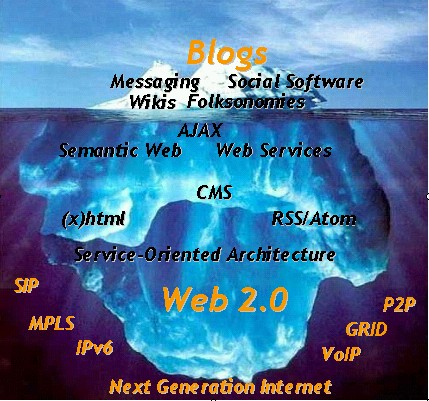
decentralized news At this point it was noted that: The Web has evolved very rapidly. Today we talk about WEB2 to define new procedures used to transmit and receive information through the Internet. These web pages and communication tools have become primitive schemes of work.

free sharing existing resources and the website (www.youtube.com - www.skype.com - www.box.net - www.blogspot.com - www.pikasa.com)

blogs are located in the forefront of the resources offered by the Internet but not as a means of release of information but as a means of permitting issue, reissue feedback and information from sender to receiver, receiver to another receiver or receiver to the sender.

In this logic, the transmitter or operator of the BLOG or becomes BLOGGER moderator who has the privilege of defining the information to remain on the Blog or otherwise may transfer that privilege to others either with full or partial privileges on the content to be managed in a particular blog. In this way the blog works 24 hours a day with feedbacks that may be issued by the visitors themselves directly or through the Blogger. Or just the blog set up with a specific remedy can chat with voice and video. This means that we can answer questions "FACE to FACE."

how to upload videos to the web / Processing digital camera to the final producer in the computer and the Internet - Gabriel

audio compression for uploading to the web by Ismael

is important so that browsers can act with greater speed and ease, there are programs to compress audio. Which we will use is the mp3 sound.

often can record press conferences, homilies of Bishops and to upload to the Internet and sharing. If it is too heavy, the Internet takes time. But if it is compressed, you can climb more easily.

In all these cases it is necessary to pay the server space. All these services are free. §


Wiki Whiteboard, is conceptually a whiteboard and all those who access can view and edit process. Those who hold the key that is unique can change the board. It's like a Word document that many people build.
utilitarian tools for the operation of the blog and wiki: On the Internet there are free virtual space for the storage of data files in formats of video, audio, still photo or text that will be used on blogs or wikis. These spaces are the following video format


http://www.youtube.com/
http://www.blogger.com/
http://www.video.google.com/

Format Audio Www.urpimp.com/flashmp3player

http://www.pikasa.com/
http://www.boommp3.com/

Audio and Video Format
http://www.blip.tv/
Save

http://www.flickr.com/ files
http://www.box.net/ audio files, videos, photos gives you a link to the file you want. Call


http://www.skype.com/ online for free calls between registered and low prices for those not registered can contact cell phones and the world


§ The program continued with a series of exposures responsible for print and electronic newsletters in different jurisdictions across the country and sharing of resources or methodologies for carrying out each number.

Conclusions:

It became clear that a day has been very little time to develop more issues, so we saw the need to maintain contact to exchange experiences and lessons learned in carrying out the newsletters.

Friday, June 22, 2007

Expensive Cleopatra Costumes

a website and I have no money or knowledge

and why not use a blog, to open the Web
here will give you an example of how a pastor has opened the website of his parish and used as a bulletin board, as a newsletter, as a way to communicate ...

I say no more and show them the direction
http://parroquia-de-concon.blogspot.com/

in fact there are many blogs that are used as institutional web pages, news agencies ... or simply recounted

learn to use blogs is simple. experience ... and if you're wrong ... because "delete" and try again

and if you ask me ... "Parent blogging is a sin?" I say better
asked a Christian, which defines a "cure blogger"
http://cristianmoyahuerta.blogspot.com/

Monday, May 21, 2007

Blender Bottle With Battery

GUIDELINES FOR PASTORAL CONFERENCE INFORMATION

Share content INTERNET
Until recently Internet sharing meant to put a content (text, image, audio or video) "on line" to make it accessible to users. Due to the evolution of computer technology, content sharing now means that the user endorses the content, we could say that appropriates it and uses it as computing options ofrece.La convergence of the Internet makes it susceptible to any reality computer (converted into binary format) is transportable.Partamos the assumption that it is offering to share some of my property with a third party. (Do not go into the copyright issue, which I think are inalienable) FEATURE

content in Internet, unlike print, radio or TV, is that these contents are not fleeting, but can be "called" with a click, this feature gives rise to a large theme file that search engines like Yahoo, Google , etc.; try ordenar.El new concept to radio or television is expressed in the form of a menu, where you hear what I want when I choose.

SHARE VIDEO: a clear example is the site http://www.youtube.com/ having a Christian version http://www.godtube.com/ , offering the possibility literally "to put into a common table" contents in video, and then be appropriated by the user (usually hung within any Web site), indeed, to see the video, does not necessarily have to leave the Web page you are visiting.


PASTORAL OPPORTUNITIES are concrete because it is a distribution channel for many audiovisual messages (firmware, television spots, corporate messages, press conferences, workshops, etc..) Which are intended to be filed by the lack of channels dissemination. Audiovisual products that cost money, and could not be broadcast at convenient times on TV channels spending means found on 'Youtube' a alternative channel of distribution.
So far there is no effort to systematize and organize the themes of such minimally videos (creating virtual channels or TV stations) that for several years now circulating on the net. EXAMPLE


Several of the speeches of Pope Benedict XVI in Brazil have been captured and placed anonymously on YouTube, this content could be uploaded to institutional or personal Web sites, offering a great spreading the message of the Pope in a given context.
Currently in the V Conference of Aparecida, offers video content (via the company Terra http://terratv.terra.com.br/ or "Internet TV" New Song Community http://www.webtvcn.com/ none of these options offer the service to share information on the concept set forth above and the great limitation is that access to these services need broadband Internet.

AUDIO: When it comes to audio content, began to decrease in number of experiences. The very concept of "sharing" using Youtube may be applied to audio files, that is stored on the Internet and can be utilized at several Web sites at once.
Several radio programs, which are invested human and financial resources, to be ignored then transmission, assuming the listener has heard or lives within the geographical area where radio program is broadcast, if stored on the Internet, could profit from the radio product. Message recordings, radio spots, recorded sermons, interviews, press conferences, are raw materials that are discarded or stored and could be computerized and put on the network with the ability to play and record on our computers.

What is gained?
- as audio files on the Web can be heard worldwide
- will simultaneously creating a digital archive (at year end have audio file to a CD, with a historical value added)
- the radio stations can use these files as first-hand material and technical quality to disseminate, without having to be multiplying the recordings.
- Web sites can use
http://www.evoca.com/ is one such site that offers these possibilities (albeit with many limitations) to share audio files under the features discussed in this text . Although a service - in my view - experimental (if anyone knows of other sites please send me an e-mail)

On the other hand, for the audio format there is Pod-cast is an instrument that greatly alleviates the dissemination of audio content.

TEXT:
curiously uncomfortable enter a field, as Web sites that share textual content to other sites are very few, at most sites are offering a banner "auto-update" ends up being a hook to the site "supplier."
The church or religious sites, in my view will be characterized by the multiplication of efforts under a common goal. It is normal that each site wants to have visibility - for that have been created - however this means that every web-master must constantly update content in most cases is taken from other sites. A clear example are the news programs or news Web sites, making us masters of "cut and paste"

Unfortunately the contents to text format, are not places like YouTube that offer the possibility of sharing under the pooling parameters. One sites that do meet the criteria to which I refer is http://www.evangeliodeldia.org/ (if anyone knows of a site to share their content on these parameters - please let me know justoariel@hotmail.com )

Example
Many Web sites are reporting on the event V Conference, pages should be copied innumerable press reports of http://www.celam.info/ then paste the content - perhaps with some photos - in your own Web page.
Although I am not computer, I think that technically there is the possibility of offering the service of creating a standard that allows it to be displaying the content owners and Web pages that require it.

This would be a value added service, since the ultimate aim is to get the message to as many people and not get as many jabs in this or that Web site. Any Web site, large or small, has a primary audience that comes and think there is common content can be released "simultaneously"


--------- ---------- o These are only examples of how to use information technology - in this case the Internet - for our pastoral work, leaving aside, at least for a moment - on rhetoric.
Learning to share content in this way, taking the example of people who in their eagerness to communicate with these "wonderful instrument" create real services and spaces, is also a sign of recognizing that not always the lead.

May these lines is a challenge to demonstrate that it is possible.
If you have any comments or observations I ask that you leave it in the blog, with a "click" on
COMMENT

Monday, May 14, 2007

Covering A Brick Fireplace With Slate Tile

V-CULTS AND SOCIAL MEANS OF COMMUNION

One of the major concerns of the Catholic Church in Latin America is without doubt the fundamentalist sects .

This subject will occupy an important space for reflection during the V Conference of Bishops in Aparecida - Brazil

Reflection on the problem of the sects that are bleeding a Catholic Christian Community in Latin America, has many angles: from funding economic world powers to the geopolitical expansion of these sects on the continent has been called the Continent of Hope, because it was said that more than half of Catholic Christians were in the New World.

Although the term fundamentalist is used for the first time in the decade of the 20 U.S. [2] , is just the beginning of the 80's comes the merger of the Pentecostal preachers and wise use of media mass media (at that time the TV and Radio, now has joined the Internet using a format in which converge all other mass media)

The truth is that the Catholic Church - especially in Latin America - was filled in recent decades by groups of itinerant evangelical preachers, radio stations and regional TV channels and national network, publishing houses that publish a variety of popular magazines , religious books, music products, contacts with the public through "personal letters computerized" virtual universities, interactive Web sites, pilgrimage centers, amusement parks for families, political lobbies, hospitals, etc.

Many of these initiatives are, today, self-sustaining by the insistent campaigns donation of the followers of these movements and the management of the media is under the direction of those Protestant leaders, who have managed to set up independent of any hierarchy, since members of these groups have the sense to ensure their salvation by following the God's will for them is indicated by the preacher.

The V Conference can not not talk about Social Media
aside communication theories and the theological foundations of this real phenomenon for other areas of academic reflection, it is important to call attention to the fact that the phenomenon of sects and reproduce the progressive Pentecostal groups is closely linked to the use of the media that they do. Moreover, when we finally realized that society is strongly influenced by the emergence of new ways to communicate and access to new communication tools.

is not entering into a technological competence in the field of communication, but to be aware of the use and importance of media in the field, not only social, but also ecclesial, spiritual and every aspect the life of the Church.

Disciples and missionaries of Jesus Christ

From the Catholic Church, Community of Communities, is expected excellence and exemplary in every action that humanizes most secularized society. So, if today the Church is looking for a space for dialogue with the World, will use the media and current languages \u200b\u200bused by people of our time.

climb is not the idea that our message of salvation must be sought out by others, because if it is true that our mission is "to go and evangelize all corners of the earth", this means the divine command discipleship that use the instruments of Divine Providence has placed at our disposal, as would the Apostle of people: Paul of Tarsus.

"Discipleship" was precisely the focus of reflection that have chosen the pastors of the Continent of Hope.

it is not enough to ignore the proper use that can be given to the media, that after all are only tools, up to us to use we can give it, bearing in mind that we like it or not living in a context strongly marked and conditioned by the novelty of virtual and real spaces that are products of our time.


P. Just Ariel Beramendi

Communicator SocialOficial for Latin America PCCS [1]


[1] Pontifical Council for Social Communications Vatican
[2] (Marsden, 1991)

Poptropica Costumes Free

Communication as MC service


no longer strange to say that we live in through a "culture media" or a "generation of the MC" what they think men and women of a certain spatial and temporal context is conditioned, in part, by the MCS [1]


contextualization
Bolivian society - in its Latin American context - with all the social changes and that is living in recent times seen in the MCS an almost essential tool to inform, educate, train and communicate either for or against social groups, whether in our reality there are analysts who speak of a social revolution, we should also to talk about a media revolution.

pastoral agents move and live our consecration in this context, regardless of where we place ourselves we are in the media culture and interact with the generation of the MC.

This brief look at the social, puts us in the context in which our religious communities carry out their mission with different charisms, with services covering various spaces in society where we are called to be signs of God. And we do in our little world, perhaps knowing that we are not alone.

"No one lights a lamp to cover it with a pot or put it under the bed, but puts it up for those who enter may see the light" Lk. 8.16

This little verse from the Gospel of Luke, has been an inspiration to invite colleagues tirelessly in my diocese as a Communication Officer in Cochabamba, and I confess that at times was little interest in sharing our activities with community - in this case the local church - can be disguised as a false humility and silence that is more of a default.

On the other hand there is the old premise that traditional MCS are something like the fourth power in society, this theory - in my opinion - has been overcome to enter the "information age", created by new technologies communication and access to them: cell phones, email, the Internet, chat, among others. Not only are we talking only about large deployments latest satellite technology, but also the traditional MCS have converged Internet and digital media are proposed as low cost and greatly speeding up the flow of information and hence communication.

You are the light of the world: a city on a hill can not be hid. (Matt. 5:14)

In this context we can call the information society and we are part and consecrated persons are called to go one step further to break down prejudices that prevent personal or group communicate with others , as little or much to do in terms of communication and are imported directly to the ecclesial community and society.


The communication within the Church helps build ecclesial communion
When trying to justify why the communication is a service, I refer to the Pastoral Instruction "Aetatis Novae "having a look back after 20 years of Vatican II and in 1992 - prophetically, announces the changes that are coming into the world of communications.
In the text of this document focuses on "communication task" and presented to the MCS to:
- service people and cultures
- service of dialogue with the modern world
- the service of human community and
social progress - the service of ecclesial communion
- New Evangelization service


Share the challenges and mature projects, enrich the experience can only be done in community, not only to internal house religious church but in a field where you may already have been initiatives in the field that we get ready to undertake.

Taking the step to share our experiences, to inform ... in short to communicate beyond our narrow environment requires overcoming the uncertainty of "going to meet with the other", discard the prejudices of race, is to step forward and accept that I am called to build community in a particular geographic and social context.

communicate our experiences is something that many times we say in our communities: putting things in common. This "sharing" this "to share with the Catholic community" creates human bonds, and this - well - it is done through specific actions: an e-mail, a brochure, an open letter, a photo sent to friends. Moreover, an interview on the radio, or television, a personal web page.

Doing this with a constructive approach is to build communication and communion. Document Aetatis

Nava
question ... why the Church insists on the right of everyone to have accurate information in their own right to speak the real truth of the Gospel and the responsibility of pastors to communicate the truth and to train the faithful to do the same? Because communication in the Church means from the communication itself that makes the Word of God. (N. 10)


Communication in society helps to strengthen the dialogue between the Church and Society
When I have ever seen on a television variety program to a nun who turned 60 years of consecrated life, and had been taken by her younger sisters to witness life in service to the sick and working in nursing homes where he had served.

thought that there were two ways to react
1 .- The critical thinking that is exacerbated religious community is showing off a lifestyle, or
2 .- see in that religion, a part of my being a Christian or Christian in a simple act of communication and witness

If Catholics are called by our baptism to be signs of Christ crucified and risen, further enshrined, and that statement goes for the tools we have at our disposal. Paul VI said in the Gospel Nuntiandi, (n. 45) a phrase that is inspiration for many embodied with sensitivity by the media: "the Church would feel guilty before God if they did not utilize these powerful means that human intelligence ever more perfect "

Secularism and the silence grows can only be an oversight, or worse still a reflection of indifference. If the Catholic Church is experiencing a time of purification, the isolated or engage in itself is not exactly a solution

However, if we decide to make a communication strategy, not just good intentions, because if we want to dialogue with society is be done using an appropriate communication language. Church not because we are all things we do - in terms of communication - will be well accepted, but rather I think it's quite the opposite: Because we are the Church, society expects of us a "communicative product" exemplary.

This does not mean surrender before the challenge to communicate well, there are no recipes in the short term but long-term learning to communicate it passes through a minimum training process. In this sense, I dare say that the training aspect, it is related to the charisma of a community, but to human formation of a future set or established. It is clear that an institute of consecrated life whose charism is evangelization by MCS hope to learn from them or them.

A tip that I dare to take to the financing of our small or big media is to make use of advertising, our media projects can not be terminated upon completion of a project's money, look for our initiatives be financially self-sustaining and this is a great challenge.

Finally am taking the foot of the passage in Mark 9, 38-40 when the disciples are - almost - complaining to Jesus and say they have seen "someone driving out demons in your name and does not come with us and tried to stop him because did not come with us. " Jesus replied, "that is not against us is for us." Nace

reflection we can all inform and communicate in the name of Jesus, because they can not afford monopolies of information, not only an inalienable human right, but also a gift from God.
Now this is already a subject of "corporate communication" where the person reporting it does from its mission and service within the church institution, we are all free to communicate while respecting the structure in which we live.

This is an issue that will remain open as a matter of profound importance in the Catholic community viewed as a community within society.
[1] cf. Novae 2

Tuesday, April 17, 2007

Hard Disk Motor Generate Electricity

THE FUTURE GENERATIONS AND

Tenerife, Spain April 24
by: Ariel Beramendi

INTRODUCTION
I begin this reflection with the visual metaphor of the clocks we've ever known: an hourglass, clock mechanical and digital clock; images that help us understand our history somehow and generational changes that we live and affect our personal history. From
generations "were and were" physically only in the place they occupied until the suppression of space and time in the way we live and communicate, it seems that there is a temporal gap, but there are only few decades have created a gap not only digital but also generational. This phenomenon is called by many experts as "globalization" had as one of its major allies to Social Media (CSM). METAPHOR

WATCHES [1] (THE TIME LIVE)
Hourglass


- is based on a natural or cyclical conception of time,
- Dominant in preindustrial societies.
- is governed by the law of gravity that allows the sand go filtering, and human effort that goes around the clock once the sand has passed at all.
- A circular view of the life cycle in which each generation reproduce the cultural content of the above.
- Nothing should be off the units of time, what matters is not accurately estimate the years and hours but being able to provide for periodic repetition of the seasons and cycles of time, the mechanism repeats the cyclical nature of time, symbolized by the succession day night, sun shade, top down,
- As the sundial was used to measure daily and seasonal cycles, the hourglass served to measure short periods.
- reflects a kind of cultural construction of the then-current age, this form of intergenerational transmission persists in institutions such as schools, military, churches or the working world in which authority structures are very settled and that age or seniority is still one of the pillars of power and knowledge.
- The sometimes repressed cultural innovation.
- Every individual sets in motion his "Hourglass" from a series of walks starting relatively rigid, determined by their origin, age, sex, rank, descent and place of birth and residence.
- These marks are transmitted through three major social institutions: family, community and power structures. Next to the American Cultural Anthropologist Margaret Mead [1] could qualify this clocks metaphor, saying the timing generation with the hourglass corresponds to a culture postfigurativa, connected directly to corporations primitive or small ideological strongholds. "Children learn primarily from their elders." Time being repetitive and slow social change.
[1] Margaret Mead, Culture and commitment, Granica, Buenos Aires, 1971 Analog Clock


- is based on a linear or progressive time
- dominant in industrial societies.
- With the emergence of industrial capitalism began to spread a linear or progressive time, techniques to measure requiring increasingly more accurate and universal
- mark the beginning or end of an activity.
- must be wound periodically so it does not stop.
- If you are fed continuously, time always flows forward, just as society progresses.
- Future replaces the present.
- a linear view would prevail under which each generation would establish a new type of cultural content.
- If we transfer this concept to the succession of generations, each generation wants to live better than before and not to reproduce their cultural content.
- The succession of generations expresses the process of social change more or less rapid, but also involves emergency gap and generational conflict: educated as different conceptions of time, age groups have different expectations about the past and the future.
- Children learn best from their peers, who constitute a new standard of authority, and innovate in a configurable, with constant modifications, life stages, rites of passage and biographical conditions for which they spent their parents.
- In our society, this modality continues in those institutions as free time, youth associations and the market, in which authority structures are distributed and in which the hierarchy of age but age is blurred as a whole remains a reference social classification.
- This clock, freeing the time of their relationship with the rhythms of nature, made him something abstract and autonomous.
- Its operation is based on manually or mechanically winding: it symbolizes the social inclusion process by which the individual is socialized to occupy a number of new roles and social status, for which progresses through a series of critical statements.
- the wrist appears in Switzerland in 1865 and in America in 1880, being a symbol of modernity, symbolically making the individual into a adulto.Podríamos be grouped under this image to cultures configuration corresponding to the great civilizations state those in which "both children and adults learn from their peers", with the Digital Clock


- is based on a virtual or relative concept of time emerging post-industrial society.
- The digital clock is based on a binary system of mathematical calculation that operates through digits, it was possible because it was feasible to transfer the regular vibrations of quartz crystal clock hands (1928).
- It establishes a virtual view of the generational relations under which it would invest the connections between age and rigid schemes collapse geographical separation.
- Although its distribution is the result of the progress we seek precision, represents a less hectic and more plural of the time, so come for the enjoyment watches, designer watches, clocks green and renewable energy.
- It is used in institutions such as the mass media, new information technologies, new social movements and new forms of digital entertainment, in which authority structures to collapse and in the ages changing symbolic references become subject to constant feedback,
- Time and passes denationalizes to be increasingly global.
- There is neither past nor future but only the present.
- Enter in daily life revolutionary concepts about time, based on the theory of relativity.
- The time measurement is more accurate and ubiquitous, present in every corner of daily life, but also much more on, off and ambivalent, dependent from the concept of space from which it is calculated.
- A feature of digital is that it allows time to reschedule the start, end, duration and timing of an activity.
- Created a real time virtual reality depends on the field as at the time welcomed.
- is emblematic of the post-industrial civilization or postmodern, based on a conception of time may be described as virtual.
The digital image of time gives us cause to reflect on those pre-figurative culture in which adults also learn from children and young people take a new authority through its collection pre-figurative of the future still unknown.

THE CONTEXT
proposed above images show that the process of rapid change where society is today, the globalizing phenomenon has affected not only the economy but also information, culture and spirituality.
The accelerated transformation of our reality hinder safe solutions or answers to problems that still remain in development.
seems that among the few social certainties have is the fact that we live in a time of change in the social sphere and staff who have not yet finished, there is a feeling that there is nothing that lasts forever.
In this context broadly described, there is a thread that makes up a new "communication ecosystem", in fact the emergence of MCS in the daily life of individuals has led to the "information society" or "culture digital "where the new way to communicate and interact has created a virtual reality, parallel to the traditional parameters to socialize, learn, do business, interact with friends, work colleagues, partners, etc.
To look at this reality and understand it minimally, it needs some "lenses" that help us see reality in which we live, these lenses that help us have a fairly clear vision of our world go through to try to understand the Today's young people and their instruments with which socialize and communicate.


Young and identity
This is the world where young people move into a "communication ecosystem" where new MCS itself are the main tools to socialize and ultimately, live.
Of the many characteristics that may have the youth of today, evidenciaré two elements that help us understand today's youth: dynamic and flexible identity, and affectivity.
One characteristic of youth culture is to have a dynamic and flexible identity [1] away from traditional, static paradigms where the individuals were "boxed" in marked stereotypes that provided some comfort. The dynamism and flexibility make a new relationship himself and the group of friends. In this context
dynamic and flexible youth are looking for and gained self-esteem, self-image and personal safety, this fact is seen by the adult world with a tendency to pessimism about the problems and weaknesses that characterize contemporary society especially insecurity and uncertainty with which it calls the world of young people where they are charged no absolute or immutable values. However, do not take into account the flexibility and dynamism of open youth greater personal accomplishment and fulfillment of human vocation.
If before we had a very rigid view of the world, today it ripens increasing the capacity for dialogue and diversity is valued more
Another feature of today's youth is the affection. In the 70's interpersonal relationships were determined by rational decisions, such as the choice of political or ideological underlying a particular way of seeing the world.
Young people today relate to - especially - according to their feelings and emotions, decisions, projects, elections, they are made from the affection with the danger of consolidating a world that neglects the rational categories.
Today's youth have been found in MCS - particularly in new technologies communication - to their great allies to cope with the daily reality. The Internet, which has become the communication platform, where almost all MCS converge, is the essential element of entertainment, information, training and socialization of the world of youth - especially in developed societies -, where the new form of talk is the "Chat", the new way to read is in "hyper-text ', you learn through the" multimedia "and makes friends in the" net-working "or" groups of the Web. "
[1] Paul Cifeli, the "conflict" area of \u200b\u200byouth cultures, Buenos Aires
New instruments for young
cell phone .- According to a study by the communication agency "Netthink" the 92.39% of English youths between 14 and 24 years has a mobile, which places this age group at the forefront in the use of this phone, compared to an average of 69.79% of the total population.
The study also reveals that over 94% of young mobile phone usually uses the messaging service, while the average of all users is 60.33%.
According to the company in 2003, there were in Spain 19,900,000 messages sent by mobile.
In Italy, for example, it is unthinkable to imagine a young man without his "telefonino (cell) play with them, exchanging jokes and greetings, send compliments and dare to say things that would hide shyness. I-Pod
youth .- Internet have become the primary source of entertainment and information, today the Web is used to distribute movies, TV and radio programs in the past five years has developed the new art "podcasting" to enable consumers to download music, documents, audio and video on your i-Pods and then exchange them with each other. Blogs
.- A blog, also known as weblog or log book (list of events) is a regularly updated Web site that collects chronological texts or articles from one or more authors, the most recent appearing first, where the author always retains the freedom to stop creating relevant published. Typically, in each article, readers can write their comments and the author to answer them, so it is possible to establish a dialogue. The use or subject matter of each particular blog is, there are personal, journalism, business or corporate, technological, educational (edublogs), politicians, etc..
For young people, blogs are the way to relate to themselves and to tell the world - in fact his world - his message.
.- YouTube is a website that allows users to upload, view and share video clips, there are hosted movie clips, TV shows, music videos and home videos (although the rules of YouTube not to upload copyrighted videos, this material exists in abundance), these videos can also be placed on blogs and personal Web sites.
was founded in February 2005 by three former PayPal employees and uses Adobe Flash to serve its content.
YouTube is owned by Google, purchasing, October 10, 2006 of 1,650 million dollars.
MEDIA AND YOUTH
The above descriptions make us understand that the world of youth is developed within a communicative ecosystem where the new lens to look at the world, are interactive whiteboards that depart each Once again the traditional television apparatus.
If in the past privileged socialization agencies were limited to family and school, today we can say we know the world through television, the world of today's youth has the parameters of the advertising and video-clip . We are therefore facing a world in video format that gives us emotions and knowledge away increasingly real old world and leaving more and more space to virtual reality.
The young have the condition, and no means exclusively or predominantly to circulate through the school, but it becomes a "target recipient" of advertising and displays a world juvenilized hot.
With the globalization of communications and advertising in support, identity and symbolic appropriation act has left the territorial domain to be in the dimension of trans-space consumption. However, this cultural world, is not a homogeneous [1] , but a re-articulation of (national) territories that are fragmented and virtualized, a circumstance that leads to young people from different geographical latitudes perceive that they have more in common between them, that young of surrounding neighborhoods, as compared to that away into symbolic capital, masses of young people who are building and deploying identity , setting his world youth.
The TV, cable and the Internet have contributed significantly to shape this new reality, a transnational community of young consumers who shares new symbolic universes which are part and where they socialize.
regard to the new generations and the media, I suggest the following video of science fiction in order to reflect where it takes us this "ecositema communication", also called "information society."
[1] Germain Muñoz, "Youth of the XXI century: new language readers, Bogotá, 2004
Communication in 2015: http://www.unabvirtual.edu.co/epic/index.html


THE WORD YOUNG
not underestimate young
This descriptive analysis on young people and their communication ecosystem also reveals that the new generations do not always find a space in traditional institutions somehow continue to look with suspicion on the young. Hence comes the almost existential question: being young is an advantage or a disadvantage?
The answer to this delicate question should be "by no means a disadvantage," because the world of youth is what gives the characteristics and identity to the world today, more simply say that the world has juvenilized, and we might even say obsessively everyone tries to be "eternally" young. Contradictory
seems that nobody wants to bet on young people, phrases like "you're too young for this" are the words we have heard on more than one occasion; so one day we wake up and when we are preparing for a new project, listened - perhaps the same people - "you're too old to do this" we still have to breach with hope, so that when they cast the confidence in our abilities, never leave room for failure or inefficiency. While young people today have new tools that have redefined time and space, one can never underestimate these capabilities, on the other hand young people should be aware that when you bet on them, bear a heavy responsibility on which many the possibilities of their peers.
The Word of God is very wise when says: "Let no one despise you for being young. On the contrary, believers see in you an example to follow in the way of speaking, in conduct, in love, in faith, in purity "(1 Timothy 4.12), if a young person has had the opportunity to be trustee of a great work, you must demonstrate to be able to bring to completion.

The thirst for spirituality
"The Chronicles of Narnia", "Matrix", "The Ghost Rider," "Harry Potter", "The Lord of the Rings" are just some movies whose titles projected success of young people thirst for an experience rate spiritual, not necessarily provides the connection with a church institution.
"In documentaries, human interest and feature films, religion and spiritual issues stories seem omnipresent. The websites of religious and spiritual nature or natural proliferate on the Internet. In films, television series, vines, DVD, books, computer games and Internet, the world of imagination is peopled with gods and demons, wizards and witches, angels, ghosts, vampires, saviors, messiahs and mythical heroes " [ 5] .
Passing through the music of "Enya" or "U2", young people have a genuine search for happiness, self-realization and truth, which can not simply be ignored or denied, these new spaces such as virtual reality, are the new place for dialogue between faith and culture, this means using codes and specific categories of the media, can not force young people to do with the parameters of a past generation.
youth culture, new communication technologies, new social spaces, with new possibilities and problems which must be seen through the eyes of faith, ie, as "Signs of the times where you should also take the Gospel of Jesus Christ to implement the New Evangelization. There is no reason to look with fear of new technologies [6]
Believers, men and women adults, does not correspond to leave a youth left behind, but I know how to communicate with language and youth categories, so that in the communication ecosystem of youth culture, emerging opportunities for dialogue and true friendships with the Gospel.
An example of what I say has been the World Youth Encounters, which undoubtedly are repeated on a smaller scale in the particular Churches (dioceses and parishes) are spaces that have joined in intimate dialogue of spiritual experience of faith and life youth. At the time young people were called by Pope John Paul II "Sentinel of tomorrow [7] ", and were asked not to give in to injustice in the world to defend peace, always keep the world habitable and to give himself " yes "to Christ as the center of one's ideal and realization of happiness. The event of World Youth Day is an invitation to continue as areas of communication with young people where they can talk to young people genuine value they find in Christ, not only wholeness as a concept, but also to a subject susceptible be a "good friend" ... the Supreme Friend.


about the world
In conclusion I would note that while the face of youth culture has become increasingly virtualized, precisely because of the new communication technologies, it is for men and women of faith of all ages , Christianize virtual reality, young people of these new spaces created by the MCS who are able to relate and tell the world who they are, what you feel, how they see the world and how they live their faith, what they feel when they go beyond their limits when face of suffering and happiness.
Is that what they are already making millions of young people through instant messaging and blogs, is for young Christians also break into this world carrying the face of Christ.
ends with a message from John Paul II, for you:


[1] Feixa Pampols Carles, The Hourglass. Youth culture in Mexico, Mexico, 1998

[2] Margaret Mead, Culture and commitment, Granica, Buenos Aires, 1971
[3] Paul Cifeli, the "conflict" area of \u200b\u200byouth cultures, Buenos Aires
[4] Germain Muñoz, "Youth of the XXI century: new language readers, Bogotá, 2004

[5] Signis Media Magazine, "Spirituality and popular culture", I/2007
[6] John Paul II, Apostolic Letter The Rapid Development, January 2005
[7] John Paul II, Apostolic Letter Novo Millennio Ineunte, January 2001

Friday, April 13, 2007

Cake Phrases For Adoption

Epic, as will Internet by 2015?


This ducumental perfect fit for discussions always desaperecerán weapon whether or not the newspapers or rather to enrich them with better arguments, the discussion of how new media are changing practices ...

good thing is that we can rediscover this "futuristic parable" (As he called Professor José Luis Orihuela) with subtitles in English that was one of the problems that had the video (in its previous version 2014) or also on YouTube to share and lower elsewhere.

So enjoy again from Epic 2015 in English (thanks to Cinerama, excellent film blog, for the tip). (Incidentally in this story that Google and Amazon are "Googlezon" is out Technorati) 2015 Epic


film credits in: http://www.unabvirtual.edu.co/epic.php

Wednesday, April 11, 2007

Mild Ptosis Eyelid Exercise

Social Communications and Youth (1970)

MESSAGE OF POPE PAUL VI TO THE FOURTH DAY

GLOBAL COMMUNICATIONS


Dear brothers and sons, all you men of good will,
you, especially youth of the world:

The World Day of Social Communications this year focuses on a topic that will surely greatly concerned "Social Communications and the young." In fact, who are not aware of the immense responsibility of each and every one of us, before history and before God, to take advantage of extraordinary opportunities that the media give us to help young people to learn, to form, to discover the real problems of the world, pursuing the true values \u200b\u200bof life, to assume fully their vocation as men and Christians?

are indeed pressing questions faced by all people of good will, private organizations, national or international, and the Church: Adults, how will the youth of tomorrow in this universe are you today make ready? Young, what society are you going to do when you take your hands touch the destiny of the world?

Brothers and sons, all we mean, urged on by the awareness of our pastoral responsibility for tomorrow as we will be ready today, with the help of God.

Is therefore necessary to recall once but the phenomenon becomes every day more widely? The press, radio, television, tend to neutralize and even to supplant yesterday as generations passed to your heirs using traditional media culture: the family atmosphere, the educational activity of the school and parish, education of teachers and educators. Now come into play new sources of knowledge and culture than by their sheer power of penetration, impact achieved with the sensitivity and intelligence, yet the procession of imaginative and ideological dissonance caused by sound and visual images. Wonderful

opening means of contact, communication, participation, certainly. Provided, of course, do not forget your character means to serve an end, the only end worthy of the name: the service of man of all men and all men (cf. Populorum Progressio, n. 14). But rather, as happens too often, managed by an industry becomes its own end, degenerate into instruments of exploitation particularly of young people and children, consumers easy to drag down the slopes of eroticism and violence, or the winding roads of uncertainty, anxiety and distress. I wish that all honest people should be brought together to launch a cry of alarm and an end to companies of corrupting force is to qualify.

So, who does not grasp the urgency of using such means of communication and emotional language, through sound, image color and movement that are truly modern channels of human interaction, able to respond to the expectations of youth?

What great fortune this abundance of food, whether it is healthy, if the body is ready to receive it, if you can even assimilate without poisoning! Wonderful opportunity, certainly for many young people to find a distraction from quality, to acquire a wealth of information and, for some, receiving a first training reading and writing, "we remember especially in this World Year of Education, proclaimed by the United Nations on the eve of the second decade of development," access to high culture, taste the authentic values \u200b\u200bof brotherhood, peace, justice, the common good.

truly exciting task of those who run the media giant, putting them in the service of youth. But what will all this if parents and educators do not help young people to choose, judge, to assimilate what they are proposing, and thus be able to train as a man and a Christian mind? Otherwise, young people remain at risk of liabilities, fascinated, as it were, to those able to seek, brought and taken away by desires found and unable to tame character.

Finally, who knows introduce young people the message of true life, loyal and brave, perhaps unconsciously they expect? Hundreds of millions of men are excited together with the striking images of the first steps of man on the moon. Who will be able to join them in the same fervor about loving God who came to walk with walking speed in our land, to "call everyone to participate in life as children of the living God, the Father of all men" (Cf. Populorum Progressio, n. 21)? We would like paternally

encourage and stimulate all who in great numbers, we know, priests, religious and secular, are employed with ardor in searching, through the "mass media", a new language to announce the Young is good news, which remains always a new surprise. Who could doubt that, in fact, young people today expect this announcement, are thirsting for this testimony, and can recognize they, too, with deep joy that is, in himself, the answer to your questions more radical and disconcerting, who "has made unto us wisdom, righteousness, sanctification and redemption "(1 Cor, 1, 30)?

"young, seek Christ to keep you young '(St. Augustine, Ad fratres in hermitage, Serm. XLIV). Here's what I want for you and what you ask.

Making all parents and educators, producers and users of the press, radio, film and television this World Day of Social Media for a fruitful discussion and to make fruitful resolutions directed at the greater good youth.

With the confidence that they will do, we send all our affectionate Apostolic Blessing.

Vatican, April 6, 1970.