 by: Just Ariel Beramendi
 reflection of the Catholic Church is maturing and evolved in tandem with the historical, cultural and technological instruments of social communication, without forgetting at any moment that these media continue developing and increasingly affecting society. Before the V Latin American Episcopal Conference and the Caribbean, with hindsight this is the reflection on the communication in the Church in Latin America and Caribbean.
COMMUNICATION IN PUEBLA (1979)
In the Assembly of the Bishops of Latin America and the Caribbean, held in Puebla at the end of 1979, the common thread of thought of the Catholic Church in Latin America and the Caribbean has been stressed that evangelization, proclaiming the Kingdom, is communication and therefore the media should be taken into account in all aspects of transmission of the Good News. (DP1063)
A constant concepts such reflection is the idea that the essential mission of the Church is evangelization, and which could not dispense with the media to proclaim the Christian message effectively.
"The Church would feel guilty before God if they did not utilize these powerful means that human intelligence ever more perfect" (Evangelii nuntiandi, 45)
So the thinking and attitude of the Church to these instruments is changing the extent that they affect more and more in society and therefore in the life of the Church.
In Puebla it is recognized that the pastoral are not trained in this area (DP1077) and that would do well to find space for training in the area of \u200b\u200bsocial communication, even frowned upon investment in this area by superiors.
 Puebla If the communication refers to "massive" in Aparecida and can not stop talking about an ecosystem of communication as a product of globalization.
 face of poverty, marginalization and injustice Puebla document, in the field of communications, claims that the Church should give more voice to the dispossessed (DP1094), today are the same media that offer the possibility - the previously ignored - of not simply passive recipients but active emitters interacting with reality and somehow found space to amplify the "voice" that have always had and that society does not listen. The role of the Church in this context is that of the integral human development, ie not just a material handouts, but accompanied by adequate information and training so that people can jump the digital divide and leave the exclusion found in the lack of access to the new "citizenship cards" that offer social media.
While in the early '80s in Puebla states the right to information (DP1095). The Aparecida document assumes new forms of exclusion and speaks of illiteracy in the use of new media and shows great concern over new forms of marginalization caused by those with access to information and communication technologies (info- poor DA 490) and those able to access and use these communication tools. (Info-rich)
COMMUNICATION IN SANTO DOMINGO (1992)
Santo Domingo in the reflection on the communication takes another step of maturity to understand the communication - Evangelism, Proclamation of the Kingdom - as communion (DSD 279) "What we have seen and heard we proclaim, that you also may have fellowship with us. And we are in communion with the Father and His Son Jesus Christ "(1 Jn 1.3).
The "leap" Santo Domingo document done in thinking about communication is considerable, it conceives of itself as evangelization communication to communion. In fact, the reflection proposed by the bishops in this document is the result of a reflection of theology articulated in terms of communication (the mystery of the Trinity and the incarnation of the Son of God, seen in terms of divine communication and communication of the divine and human) .
After this theological reflection, Santo Domingo becomes the pastoral dimension practice under the premise of "Strengthen the Church's presence in the world of communication" as a priority for those responsible for the people of God (cf. John Paul II, Inaugural address, 23)
But the bishops in Santo Domingo warn that mass media are the risk of manipulating and imposing views of the world, especially since the ownership of media companies is in the hands of a few. Thus, there is a call to pastoral workers to be vigilant and critical time to consume media products. In response
pastoral in this context arises from the Santo Domingo document, use the media as instruments for culture and communion within the Church and as a space for dialogue Church World.
Like Puebla, in Santo Domingo reiterated that criticism and professional training in the use of social media is the pastoral response in the area social communication in this sense both papers again appeal to the bodies and public associations Catholic communicators to find in them a space for mutual support and training in this field.
In 1992, when publishing this document, there is still the phenomenon of media convergence in the digital format, and the Internet had not broken into the society of telematics and informatics were designed only as "new challenges for integration of the Church in this world "(DP280) and thus if it comes to Santo Domingo Cultural Image in Aparecida talking about the information society
LA APARECIDA COMMUNICATION (2007)

"Disciples and missionaries of Jesus Christ so that our peoples may have life in Him." Under this slogan the Catholic Church in Latin America and the Caribbean have seen the reality and from the eyes of faith has been evaluated and given a critical view on the life of the Church in the present context, inviting-finally - to become aware of our identity disciples and missionaries of Christ. ("See, judge and act," DA19)
While the document in preparation for the V Conference was not much space to the reality of communication within the Church [1]; pleasant surprise was the to learn that the reflection of the bishops of the Continent of Hope gave the Church a document that invites all of it readable coded communication. Where
see the word mission, fellowship, evangelism, discipleship, witness or understand it as the act of communicating Christ and his message. It is this sense we should be clear that the members of the Church - acting according to the Gospel - when evangelizing are communicating and when we communicate we are evangelizing.
why Aparecida document has been written in code communication, and that vehement calls to be disciples and missionaries of Christ, that is communicated using the means at our disposal, beginning - of course - from his own life.
The message of conversion and pastoral ministry within the Church - as the new document of Aparecida - also should reflect on spiritual renewal and missionary to be projected out (DA99) in the form of a dialogue between the Church and society.
In order to examine the subject of communication in Aparecida we outline our thinking into five sections:
1. the context of globalization
2.
opportunities 3.
risks 4. pastoral proposal
5. Public opinion and the Church

1. Current context. Globalization due to social media comunición
A first approach to index the document of Aparecida - the first part of the document entitled "the life of our people today", ie the first 2 chapters, evidence of reflection and description of the current situation by the bishops of Latin America and the Caribbean. The undeniable phenomenon of globalization is what makes this reflection, in fact recognizes that today's society, characterized by profound changes in such a short time, is conditioned by this phenomenon.
a reality that undoubtedly challenges to members of the Catholic community (DA33) and caused inter alia by the rapid development of communication technologies.
"A crucial factor in these changes is the science and technology, with its ability to genetically manipulate the life of living beings, and their ability to create a network of global communications, both public and private, to interact in real time, ie simultaneously with, despite the geographical distances. As they say, history has accelerated and become dizzying changes themselves, since they communicate with great speed all over the world. "(DA34)
As mentioned above, if the documents appear to speak before an image culture and mass media; Aparecida reflection of the very fact that the information society in which we find is a product of "communication ecosystem" created by new communication technologies, where these instruments is pervasive, and not infrequently may threaten the privacy of citizens, or at least call into question what is private and what public.
2. New opportunities offered by new technologies
interpersonal level, it is argued that new communication spaces are an opportunity to reinforce and encourage the exchange of experiences and information to intensify the religious practice through sides and between the community guidelines.
the Bishops of Latin America and the Caribbean are a sign of hope to the large number of media for the Church and which can influence the culture (DAF-99). Aparecida
assumes as a fact the phenomenon of globalization and the parameters of the Social Doctrine of the Church is required the globalization of solidarity and international justice (DA406) that will be actively using the new forms of civic participation created by media, where it can promote democracy, economic solidarity and development. If on the one hand there is the manipulation of information, on the other pastoral workers are called to continue creating and promoting space where all people are recognized and heard.
With Pope Benedict XVI can say that the Good News proclaimed by the Church must use the instruments at its disposal, "must not limit ourselves solely to homilies, lectures, Bible courses or theology, but we must also use to the media: press, radio and television, websites, forums and many other methods to communicate effectively the message of Christ "[2] but then it is necessary" is also a social catechesis of the Church, is very useful to the Compendium of Social Doctrine of the Church, because we have to remember that evangelization has always promoting human and authentic Christian liberation [3].
3. While risks
Aparecida document has been written in code communication and can be read and implemented as such, reflection of our pastors did not mince words when warning of the risks involved in the communication ecosystem where it acts the Church and each of its members.
On the one hand, they point the situation where young people are victims of the negative influence of postmodern culture, especially social media, "bringing the fragmentation of the personality, the inability to final commitments, lack of human maturity, the weakening of spiritual identity, among others, which hinder the formation of true disciples and missionaries. "(DA318)
is also clarified that although our lives - in a sense - is conditioned by the context of social media, they not give the meaning of life. We read in the paper "... we need, at the same time, we eat the missionary zeal to bring the heart of the culture of our time, that sense of unity and full of life that neither science nor politics, neither the economy nor the media can provide. "( DA41)
from Aparecida Bishops complain that the mainstream media are creating a culture where science and technology serve only to market with "only criteria of efficiency, effectiveness and functionality" (DA45) marginalizing dignity of the human person.
Another risk arises in the context of the information society, we can point with the neologism of "info-intoxication [4]" is now more than ever - warn bishops - are immersed in impressive amounts of information which are urgent criteria for critically reading the information that we "bombed" (DA36) "The media have invaded all spaces and all conversations, also introduced in the privacy of home. Next to the wisdom of tradition is now located, in competition, the latest information, distraction, entertainment, images of the successes that have taken advantage in favor of technological tools and expectations of prestige and social esteem (DA39) the risk that people look for a sense of life in places where in fact find it and remain only as subjects disoriented.
4. Pastoral
The bishops of Latin America and the Caribbean give a boost to Catholic Christians we use existing tools and languages \u200b\u200bto communicate Christ, warn that many times as a church do not use the codes that communicates modern society today, leaving marginalized in the broader social and cultural dialogue (DA100-d).
In this sense, the concept of social communication and media can not only instrumentalist, ie see the communication within the Church only as merely technical, but as a transversal action acting in the Church, which has a form of expression, to listen, to be alert to signs of the times and culture today. Aparecida
enhances the role of the laity lot when talking about lay evangelistic activity and the incidence of the laity in today's culture - shaped and distorted by many times the media - it is precisely in this space that the baptized are called to communicate Christ, "especially in contexts where the Church is present only for them" (DA 174)
The Aparecida document addresses the issue of pastoral communication in paragraph 10.3 of Chapter 10 "Our people and their culture."
point is the finding that media culture is the world in which we move (n.484), it is recognized that the first proclamation (kerygma) and faith formation, these media can not ignore (n.485 .) Because the ecosystem
communicative society, the bishops publicly commit to a path next to the journalists, accompanying and encouraging initiatives in this field (n.486) which implies a considerable change in mindset.
is recognized that the Internet as a communication tool has enhanced the virtual reality space for interaction and likely to be evangelized, ie we evangelize the cyber-space. (N. 487). For this reason it is assumed Internet with "realism and confidence." Internet
Indeed, although not replace interpersonal relationships, create new spaces and forms of socialization that are complementary to the traditional. (N.489)
Finally, Aparecida recognizes that the digital gap leads to new forms of exclusion, so it appeals to the parishes, communities, schools and Catholic institutions to create opportunities for training and access to the Internet to access media culture. (N.490)
5. Public opinion and the Church
And to conclude, and as other practical aspects of communication in the Church, Aparecida is concerned about the role of Catholics in public life and the incidence of the Church in public opinion in society, inviting the pastoral and especially the ministers of worship, be "opinion leaders", which require continuous training in business and consumer issues for the Church and society.
497. It is necessary to communicate the Gospel values \u200b\u200bin a positive and proactive. There are many who say unhappy, not with the content of the doctrine of the Church, but with the way it is presented. For that, in developing our plans we are pastoral:
a) Encourage the formation of the laity capable of acting as a true subject of Church and competent interlocutor between the Church and society, and society and the Church.
b) making optimum use of the Catholic media, performers and making them more effective, is for communication of faith, is for dialogue between the Church and society.
c) act artists, athletes, fashion professionals, journalists, communicators and presenters, as well as producers of information in the media, the intellectuals, teachers, community and religious leaders.
d) To rescue the priest's role as opinion makers.
In this regard the Aparecida document reflects on the role of Christians in society and the public testimony of their faith, "Disciples and missionaries in public life" is section 10.5 which calls Christians to be leaven in the dough, in a context where the membership of the faith is dwindling and where secularism is occupying more space.
listen and communicate, discuss and understand, are tasks of those currently working in the field of communications. And above all, serve all the communications tasks of the Church, put all our skills, technology and new languages, the service of that mission that gives meaning to our lives.
Together with our pastors gathered in Aparecida we can say that when a pastoral worker or a priest can no longer communicate Christ, his ministry has no reason to be, and so, if a baptized Christ could not communicate his Christian would no longer be justified.


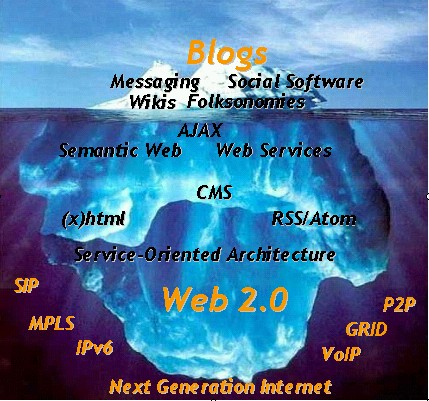 blogs are located in the forefront of the resources offered by the Internet but not as a means of release of information but as a means of permitting issue, reissue feedback and information from sender to receiver, receiver to another receiver or receiver to the sender.


 This is the world where young people move into a "communication ecosystem" where new MCS itself are the main tools to socialize and ultimately, live.


